In hospitals, hygiene is not a background consideration. It is built into every decision, every protocol, and every surface that comes into contact with patients. Linen is no exception. Bed sheets, patient gowns, towels, surgical drapes, and staff uniforms move continuously through wards, ICUs, operation theatres, and recovery rooms. Each piece that is not processed correctly represents a potential infection risk, not just an operational lapse.
This is why hospital laundry services are increasingly being treated as part of the clinical infrastructure rather than a support function. The way linen is collected, processed, handled, and returned to wards has a direct bearing on patient safety, staff exposure risk, and a hospital's ability to meet accreditation standards.
This blog looks at why linen hygiene matters so much in clinical settings, what proper processing actually involves, and how hospitals across India are approaching this through partnerships with specialist B2B laundry services providers.
Why Linen Is an Infection Control Issue, Not Just a Housekeeping One
Hospital textiles are exposed to a range of biological contaminants every day. Bodily fluids, blood, wound secretions, and drug residues can all be present on soiled linen. Without controlled handling and validated disinfection, pathogens can survive on fabric fibres and travel across departments, either on the linen itself or through the hands of anyone who handles it improperly.
The consequences of poor linen management in a healthcare setting are serious. Cross-contamination between patients, increased exposure risk for nursing and housekeeping staff, pathogen persistence in fabric, and contamination during storage or distribution all contribute to a higher risk of healthcare-associated infections. These are among the most preventable adverse events in any clinical facility, and linen hygiene is one of the controllable variables.
Infection control teams in well-run hospitals treat linen as a monitored risk area with defined protocols, not as routine housekeeping. That distinction matters when you are setting up or evaluating your laundry operation.
What Proper Healthcare Linen Processing Actually Requires
Processing hospital linen is considerably more involved than standard commercial laundry. The requirements are stricter, the consequences of errors are more serious, and the workflows need to be designed specifically around infection prevention rather than just cleaning efficiency.
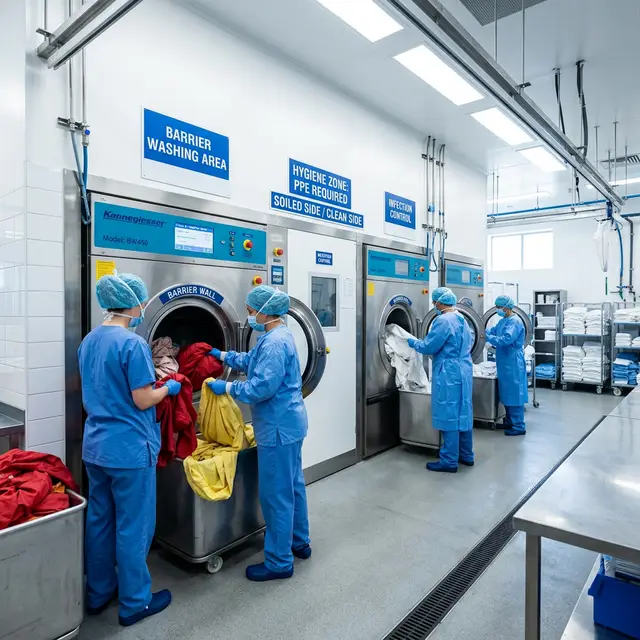
A compliant healthcare laundry operation typically requires physical separation between soiled and clean linen zones at all times, barrier-based washing systems that prevent cross-contamination during processing, disinfection-grade wash cycles validated to eliminate specific pathogens, chemicals approved for healthcare use at the correct concentrations and contact times, and controlled drying and finishing environments that prevent recontamination after washing.
Storage and distribution within the hospital also fall within the infection control framework. Clean linen needs to be protected from environmental contamination before it reaches the ward, and the handling chain from laundry to patient contact needs to be documented and consistent.
When all of these elements are working together, linen returned to wards can be trusted. When any one of them breaks down, the risk re-enters the system.
Managing Linen as a Clinical Resource, Not Just Inventory
Beyond the hygiene requirements of each wash cycle, there is a broader question of how linen is managed across its entire lifecycle within a hospital. Modern healthcare facilities increasingly think about their linen inventory the way they think about other clinical resources: with attention to availability, condition, traceability, and controlled movement.
This means tracking which linen goes to which ward, monitoring how many wash cycles each item has gone through, identifying damaged or degraded pieces before they re-enter circulation, and planning procurement and replacement so that wards are never short. It also means maintaining hygienic storage conditions and controlled movement of linen through the facility at all times.
A linen management company that treats this as a structured service, rather than just a washing contract, brings significant value to a hospital's infection control framework. The difference between the two is the difference between outsourcing a task and outsourcing an outcome.
The Case for Working with a Specialist Provider
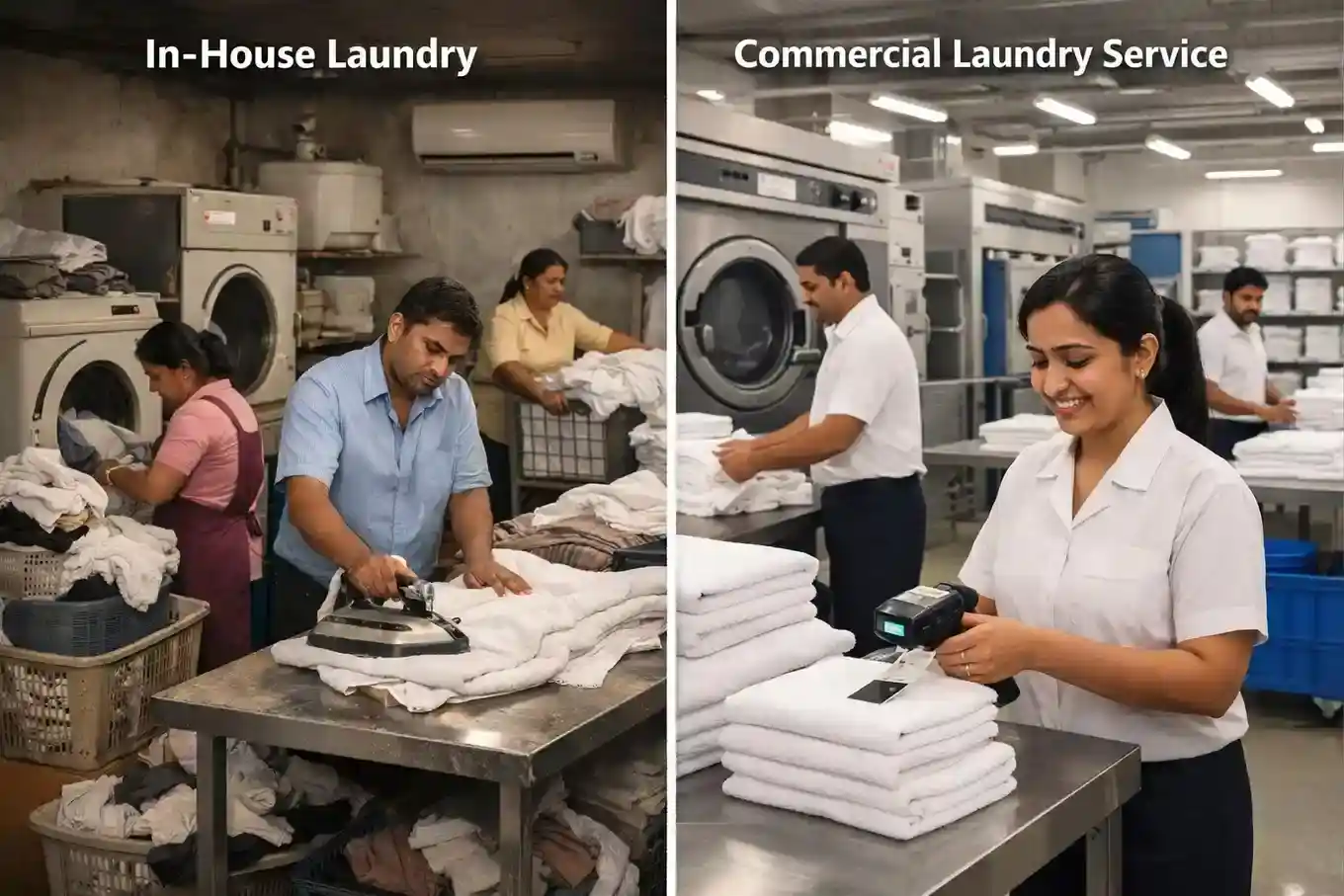
Running a compliant hospital laundry in-house requires significant investment in the right equipment, staff training, chemical management, process documentation, and ongoing quality monitoring. For many hospitals, this is neither their area of expertise nor the best use of their management resources.
Partnering with a dedicated B2B laundry services provider in India that specialises in healthcare linen addresses this directly. A specialist brings industrial-grade processing capability, controlled environments designed specifically for clinical linen, trained handling teams who understand infection control requirements, and documented processes that support accreditation and compliance.
For infection control teams, this means predictable disinfection performance rather than variable in-house results. For facilities managers, it means no capital outlay on laundry equipment, lower utility consumption through efficient industrial processing, and simplified compliance monitoring. For nursing staff, it means reliable linen availability without the uncertainty of an under-resourced in-house operation.
Across India, hospitals that have moved to specialist outsourced laundry arrangements consistently report improvements in linen hygiene standards, reduced infection control incidents related to textiles, and significant operational simplification.
Linen Quality and Patient Experience
Infection control is the primary concern, but it is not the only one. Linen that is processed correctly with appropriate chemistry and temperature control also maintains its softness, absorbency, and structural integrity across repeated wash cycles. For patients who are already unwell, the texture and freshness of the linen they are in direct contact with matters more than it might seem.
Premium laundry services in a healthcare context means achieving both outcomes consistently: linen that is clinically safe and physically comfortable. The two are not in tension when the processing is done properly. Poor laundry practice tends to compromise both simultaneously, producing linen that is neither fully hygienic nor pleasant to use.
Clean, well-maintained linen also signals something to patients about the standard of care they are receiving. It is a small but tangible indicator of how seriously a facility takes the details of patient comfort and dignity.
How Quick Smart Wash Supports Hospital Linen Operations
Clinical environments demand a different standard of linen processing, and that is precisely what Quick Smart Wash is built to deliver. As a specialist linen management company working with hospitals across India, their processing facilities use validated disinfection protocols, barrier-based systems, and healthcare-grade chemistry to ensure that every piece of linen returned to a ward meets the hygiene standards that patient safety requires.
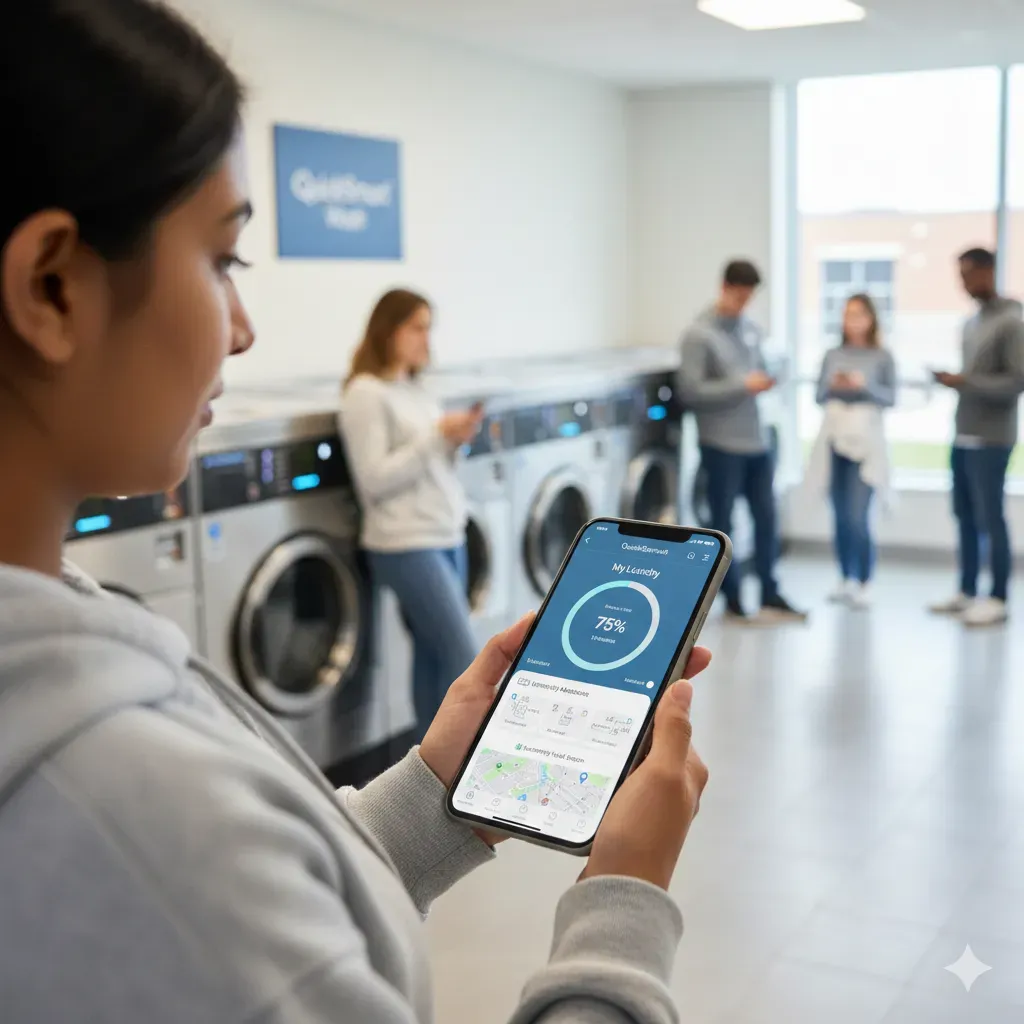
RFID-based linen tracking gives hospitals complete visibility into their inventory at every stage of the cycle, supporting compliance documentation and making audit preparation straightforward rather than a scramble. Linen rental options are available for facilities that want to eliminate procurement and lifecycle management costs entirely.
For hospitals that want processing within the facility itself, Quick Smart Wash can set up and operate a fully managed laundry plant on-premises, covering all capital expenditure, equipment, staffing, and compliance management. The hospital gets the control of on-site processing without any of the operational burden of running it.
Getting the Basics Right Has Real Consequences
Infection prevention in hospitals is built on many layers. Air quality, surface cleaning, sterilisation protocols, hand hygiene, and safe textile handling all contribute to a clinical environment that protects patients rather than putting them at additional risk.
Linen moves through every part of a hospital every day. When its processing is controlled, consistent, and managed by people who understand what is at stake, it becomes one less variable in an environment where managing risk is everything. When it is treated as a low-priority back-office task, it quietly becomes a source of risk that is entirely preventable.
If your facility is reviewing how linen and laundry operations are currently managed, it is a conversation worth having sooner rather than later.
About Md Shaquib
Md Shaquib enjoys blogging and content writing, sharing useful stories and tips online.