When we talk about what makes a hospital function well, the conversation usually goes straight to clinical outcomes, technology, and staffing. Linen rarely comes up. Yet walk through any hospital ward and linen is everywhere: on every bed, in every patient gown, draped across every operating table. It is in contact with patients around the clock, handled by staff across every department, and moving through the facility in large volumes every single day.
The fact that it mostly goes unnoticed is a sign that it is being managed well. The moment hospital linen management starts to fail, its absence becomes very loud: wards run short, infection control flags are raised, patients notice the quality of what they are lying on, and the operational knock-on effects spread quickly.
This blog looks at what professional linen management in a healthcare setting actually involves, why it matters as much as it does, and how hospitals are approaching it more effectively through structured outsourced arrangements.
What Hospital Linen Management Actually Covers
Hospital linen management is not just a laundry operation. It is a structured system that oversees every reusable textile in a medical facility across its entire lifecycle, from the moment a piece enters service to the point at which it is retired.
That system covers bed sheets, blankets, patient gowns, towels, surgical drapes, scrubs, and lab coats. It includes how soiled linen is collected from wards, how it is transported and segregated, how it is processed and disinfected, how it is inspected and finished before redistribution, and how inventory is tracked so that every department has what it needs when it needs it.
Each of these steps is governed by clinical standards, not just operational convenience. The handling of soiled linen, for instance, carries infection control implications that require specific protocols around bagging, colour coding, transport, and processing conditions. Getting any one of these wrong does not just create an operational problem. It creates a hygiene risk that can travel across departments.
The Full Processing Cycle, Step by Step
Understanding what properly managed hospital linen goes through helps clarify why this is a specialist function rather than a general laundry service.
- Collection: Soiled linen is gathered from wards in leak-proof, colour-coded bags that segregate contamination levels and prevent cross-contact during handling.
- Sorting and transport: Contaminated linen is moved safely to the processing facility using controlled routes and dedicated logistics to prevent environmental spread.
- Laundering: Validated wash formulas, water temperatures, and healthcare-grade disinfectants are used to eliminate pathogens. Wash cycles are specific to the contamination level and fabric type.
- Drying and finishing: Linen is dried under controlled conditions, then inspected for damage, repaired where necessary, folded, and quality-checked before being cleared for redistribution.
- Distribution: Clean linen is delivered back to the correct wards and departments, with inventory records updated to reflect what has been returned and what is in use.
Each step in this cycle is a control point. A breakdown at any stage has consequences that extend beyond the linen itself.
Three Reasons This Function Gets Underestimated
Infection Control
A hospital bed sheet is not just fabric. In a clinical environment, it is a potential vehicle for pathogens. Organisms such as MRSA and C. difficile can survive on textile surfaces for extended periods. Without the correct wash chemistry, temperatures, and handling protocols, contaminated linen can transfer infection between patients, between departments, and to the staff handling it.
Infection control teams in hospitals increasingly treat linen hygiene as a monitored clinical risk, not a housekeeping matter. The standards applied to linen processing, specifically thermal disinfection benchmarks, approved chemical concentrations, and barrier-based handling, exist for the same reason as surgical sterilisation protocols: because the consequences of failure are patient harm.
Patient Comfort and Dignity
Patients spend most of their hospital stay in direct contact with linen. A clean, soft, well-maintained gown and freshly changed bed sheet are not luxuries. For someone who is unwell, they are a basic component of comfort and dignity. Linen that is rough, discoloured, or inadequately washed tells a patient something about the standard of the facility they are in, even if they never articulate it that way.
Consistent linen quality across repeated wash cycles requires the right chemistry, the right temperatures, and processes that extend fabric life rather than degrade it. This is something that professional healthcare linen operations are specifically designed to deliver.
Financial Control
Linen is a significant operational expense in any hospital. Without structured tracking, items go missing, get damaged, or get over-stocked in some wards while others run short. The cost of unmanaged linen loss compounds quietly and consistently over time. Hospitals that have moved to structured linen management, particularly outsourced models with inventory tracking built in, consistently report a reduction in procurement costs and much better visibility into where their linen budget is actually going.
In-House vs Outsourced: How the Two Models Compare
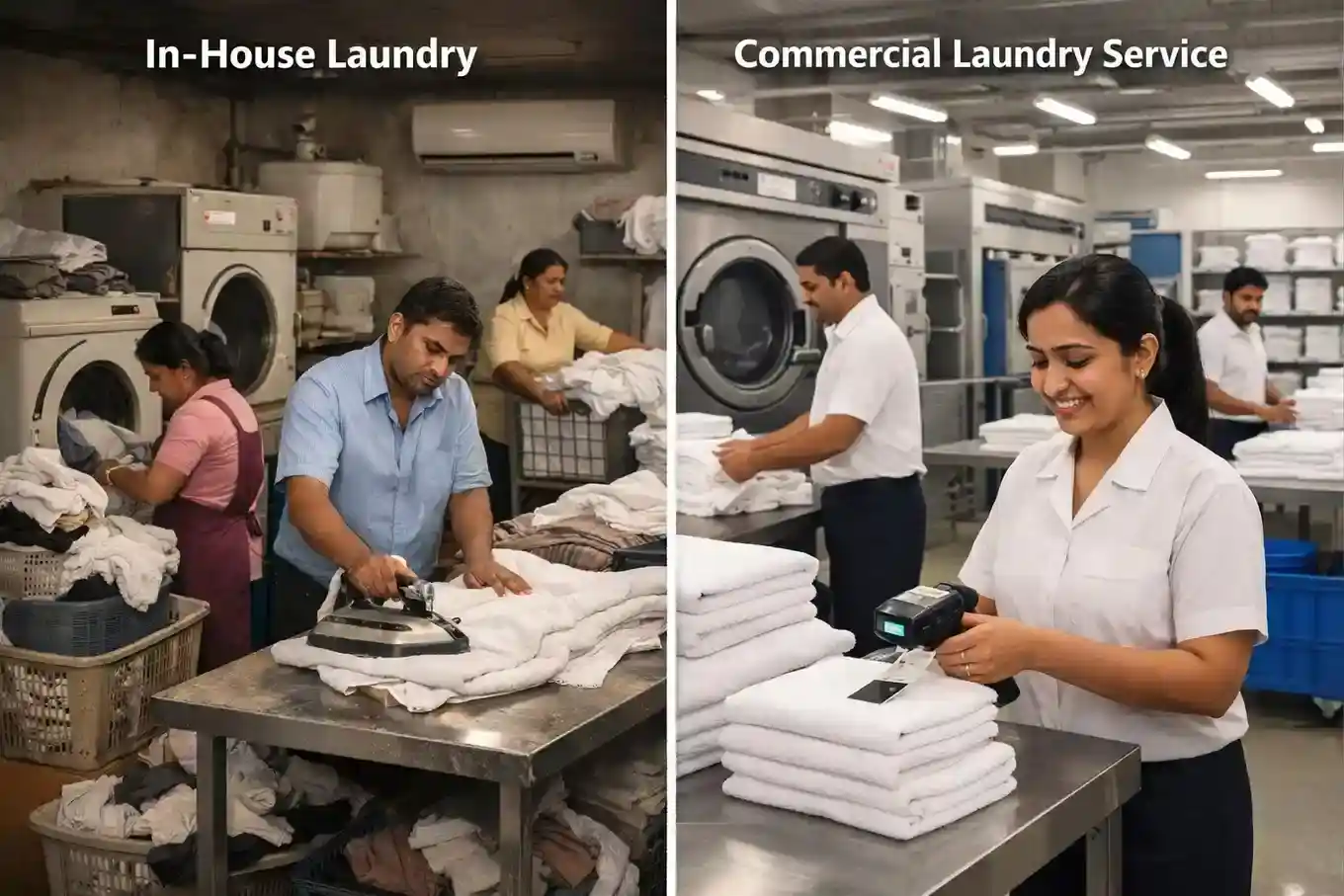
Most hospitals face the same choice at some point: continue managing linen in-house or move to an outsourced linen management arrangement. Both have their place, but the trade-offs are worth understanding clearly.
| Factor | In-House Laundry | Outsourced Linen Management |
|---|---|---|
| Cost | High capex and ongoing staffing costs | Predictable service-based fees |
| Space | Requires large dedicated infrastructure | Frees up clinical and operational space |
| Compliance | Hospital-managed, often inconsistently documented | Vendor-certified, continuously documented |
| Scalability | Limited by fixed equipment and staffing | Scales with demand, no internal restructuring needed |
| Inventory visibility | Often manual and incomplete | Real-time tracking via RFID and digital systems |
Three Practices That Make a Real Difference
For hospitals looking to strengthen their linen operations, whether in-house or through a managed partner, three areas consistently have the most impact.
- Par Level Management: Maintaining the right quantity of linen in circulation is harder than it sounds. Too little and wards run short at critical moments. Too much and linen sits in storage, degrades, and inflates costs. Getting par levels right, and adjusting them when occupancy or ward configurations change, requires accurate data and a system that flags shortfalls before they become operational problems.
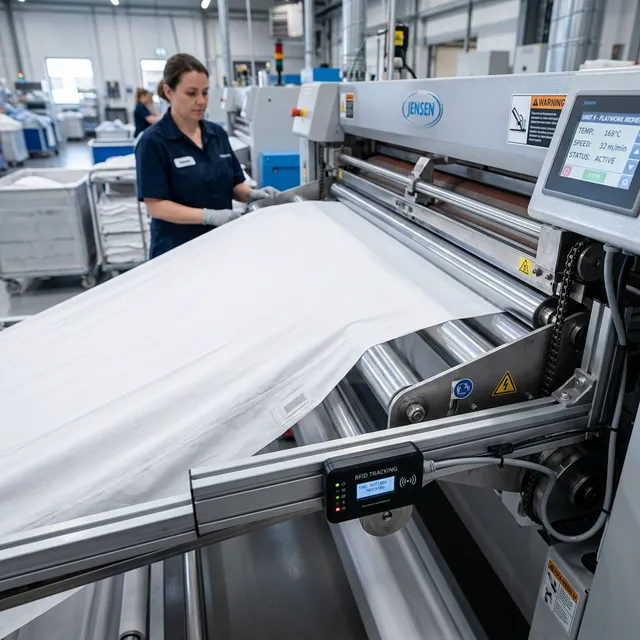
- RFID-Based Tracking: Embedding RFID tags in individual linen items enables real-time visibility into location, wash cycle count, and usage history. This eliminates the guesswork from inventory management, makes shrinkage immediately visible rather than discovered during an annual count, and provides the data needed to make informed decisions about replacement and procurement.
- Staff Handling Awareness: A significant proportion of linen damage and loss happens during use rather than during processing. Linen used to clean spills, improperly bagged at collection, or mishandled during distribution contributes to premature wear and shrinkage. Basic handling awareness among ward staff, supported by clear processes and regular reminders, extends linen life considerably.
What an Integrated Linen Management Partnership Looks Like
The difference between a laundry contractor and a genuine linen management partner is the scope of what they take responsibility for. Quick Smart Wash operates across the full linen lifecycle for hospitals, covering not just processing but procurement planning, inventory monitoring, ward-wise distribution, RFID tracking, linen rental, and end-of-life replacement.
For hospitals that want processing on-site, Quick Smart Wash sets up and operates a fully managed laundry facility within the hospital premises, handling all capital expenditure, equipment, staffing, and compliance management. The hospital retains the operational benefits of on-site processing without carrying any of the infrastructure burden.
For facilities that prefer an outsourced processing model, linen is collected, processed at Quick Smart Wash's central processing units, and returned fully finished and ready for ward distribution. Either way, the hospital's clinical teams are working with linen that has been handled to a defined standard, tracked through every stage, and returned in a condition that supports patient care.
When It Works, Nobody Notices. When It Does Not, Everyone Does.
That is the nature of linen management in healthcare. It is infrastructure. It supports everything that happens in a ward without ever being the point of the visit. Done well, it is invisible. Done poorly, it creates consequences that are very visible indeed, whether that is an infection control incident, a ward running out of clean gowns, or a patient left uncomfortable on poorly maintained sheets.
Hospitals that treat linen management as a clinical support function rather than a back-office chore, and that work with partners who approach it the same way, consistently deliver better outcomes on hygiene, cost, and patient experience. It is one of those areas where getting the fundamentals right pays dividends that are hard to quantify but impossible to ignore.
About Md Shaquib
Md Shaquib enjoys blogging and content writing, sharing useful stories and tips online.