Running a residential campus involves a lot of moving parts. Accommodation standards, student welfare, facility maintenance, and administrative efficiency all compete for management attention and budget. Laundry tends not to feature prominently in strategic conversations, but for institutions managing hundreds or thousands of residential students, it is a significant operational and financial commitment.
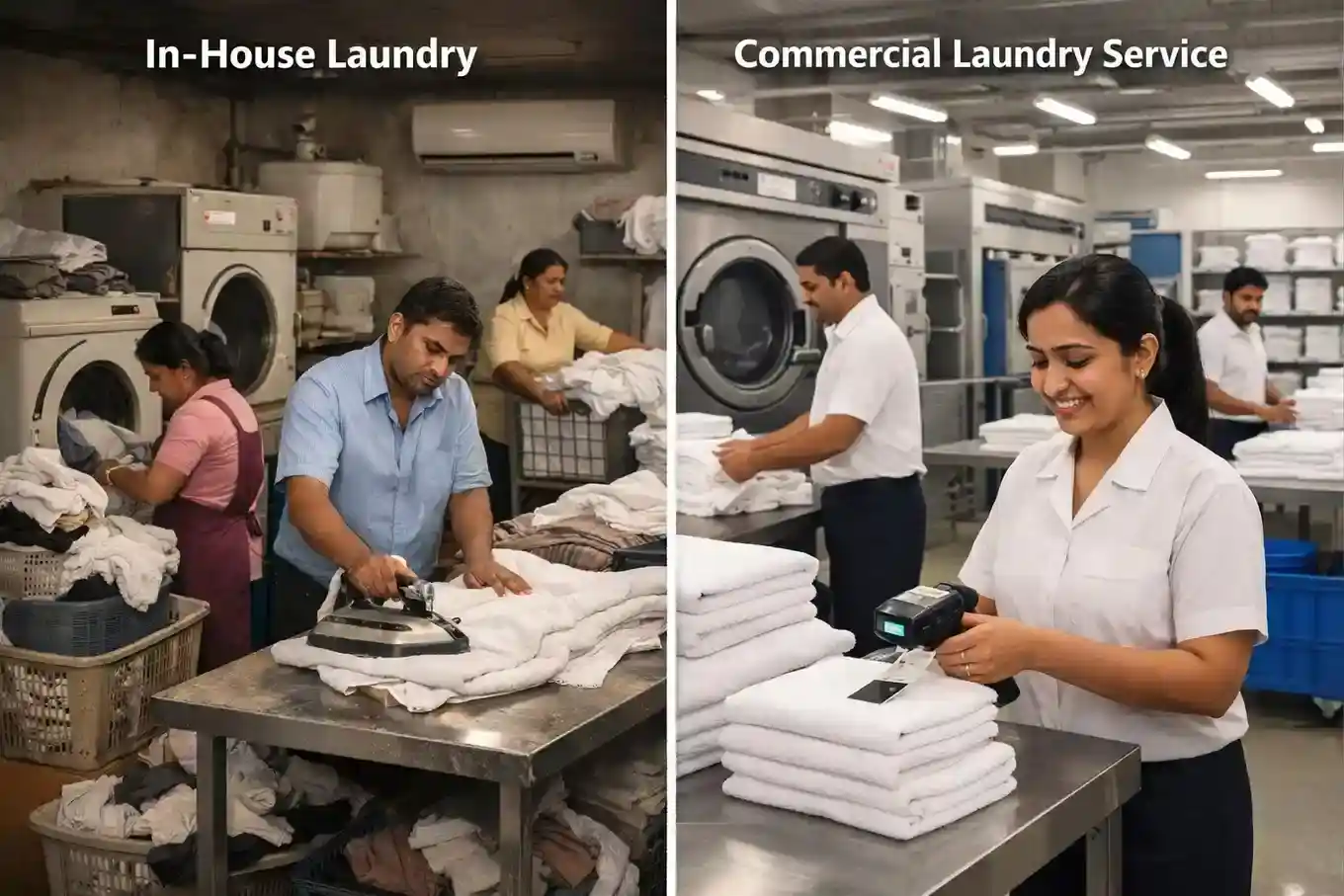
Most campuses start with self-service washing machines in hostel blocks. It feels like the practical, low-overhead solution. Over time, though, the costs and complications of that model tend to grow in ways that are not always obvious upfront. Equipment breaks down, utility bills climb, hygiene is inconsistent, and the spaces become difficult to manage.
This blog looks at where those costs actually come from, and how a structured approach to campus linen management can address them in a way that is both more efficient and more sustainable.
What Self-Service Laundry Actually Costs an Institution
The initial appeal of hostel washing machines is the apparent simplicity. Buy the machines, install them, and let students manage the rest. In practice, the costs that follow that decision are ongoing, compounding, and spread across multiple budget lines in ways that make them hard to total up accurately.
The machines themselves represent a capital investment that needs to be depreciated and eventually replaced. Between purchase and replacement, they require regular servicing, periodic repairs, and in some cases emergency fixes that disrupt student access with no warning. Every breakdown becomes a complaints issue for hostel management.
Utility consumption adds another layer. Washing machines running across multiple hostel blocks throughout the day draw significant electricity and water. These costs are real and recurring, and they are rarely factored accurately into the initial decision to go self-service.
Then the space. Laundry rooms occupy square footage that could serve other purposes. When poorly managed, they become cluttered, unhygienic, and a persistent source of student complaints about cleanliness and availability.
None of these are dramatic costs in isolation. Together, they represent a meaningful and avoidable drain on institutional resources.
The Hygiene Gap That Is Easy to Miss
Beyond the financial side, self-service laundry in shared residential settings creates a hygiene problem that institutions often underestimate. When dozens of students share the same machines with no standardised process, washing quality varies enormously. Some students run partial loads, use incorrect temperatures, or do not clean out the machines after use.
In a dense living environment, this matters more than it would in a private home. Poor textile hygiene in shared accommodation can contribute to the spread of skin infections and other health issues that affect not just individuals but the broader student community. Institutions have a duty of care that extends to the hygiene standards of their residential facilities, and laundry is part of that picture.
Professionally managed hostel linen management services replace this variability with controlled, standardised processing. Every item is washed under defined conditions, finished properly, and returned in a consistently clean state, something that self-service models simply cannot guarantee.
Where the Cost Savings in Managed Laundry Come From
Switching to a managed linen service for an educational campus removes most of the cost categories described above at once. There is no capital expenditure on equipment. There are no maintenance contracts to manage. The utility consumption associated with running machines across multiple hostel blocks disappears from the institution's bills entirely.
Industrial laundry processing is also inherently more efficient per kilogram of linen than a collection of small machines running at varying capacities throughout the day. Professional facilities use optimised load management, water recycling systems, and energy-efficient equipment that reduce resource consumption per wash significantly compared to decentralised hostel operations.
The administrative cost is also worth accounting for. Hostel staff currently dealing with machine complaints, scheduling disputes, and laundry-related maintenance calls can redirect that time toward student welfare and facility management priorities that actually move the needle on campus experience.
Sustainability as a Practical Benefit, Not Just a Policy Goal
Many educational institutions are under increasing pressure to demonstrate progress on sustainability metrics, whether for accreditation, rankings, or the expectations of environmentally conscious students and parents. Laundry operations are a meaningful lever in that effort.
Centralised, professionally managed laundry uses less water and energy per kilogram of linen than distributed self-service setups. Eco-friendly detergents reduce the chemical load discharged into wastewater. And because linen is processed with appropriate care rather than subjected to ad hoc wash cycles by hundreds of individual students, fabric lasts longer and requires less frequent replacement, which reduces textile waste over time.
For institutions building out their ESG reporting or simply trying to reduce their environmental footprint in practical ways, campus linen management solutions managed by a professional provider are a genuinely impactful change.
What the Student Experience Looks Like Under a Managed System
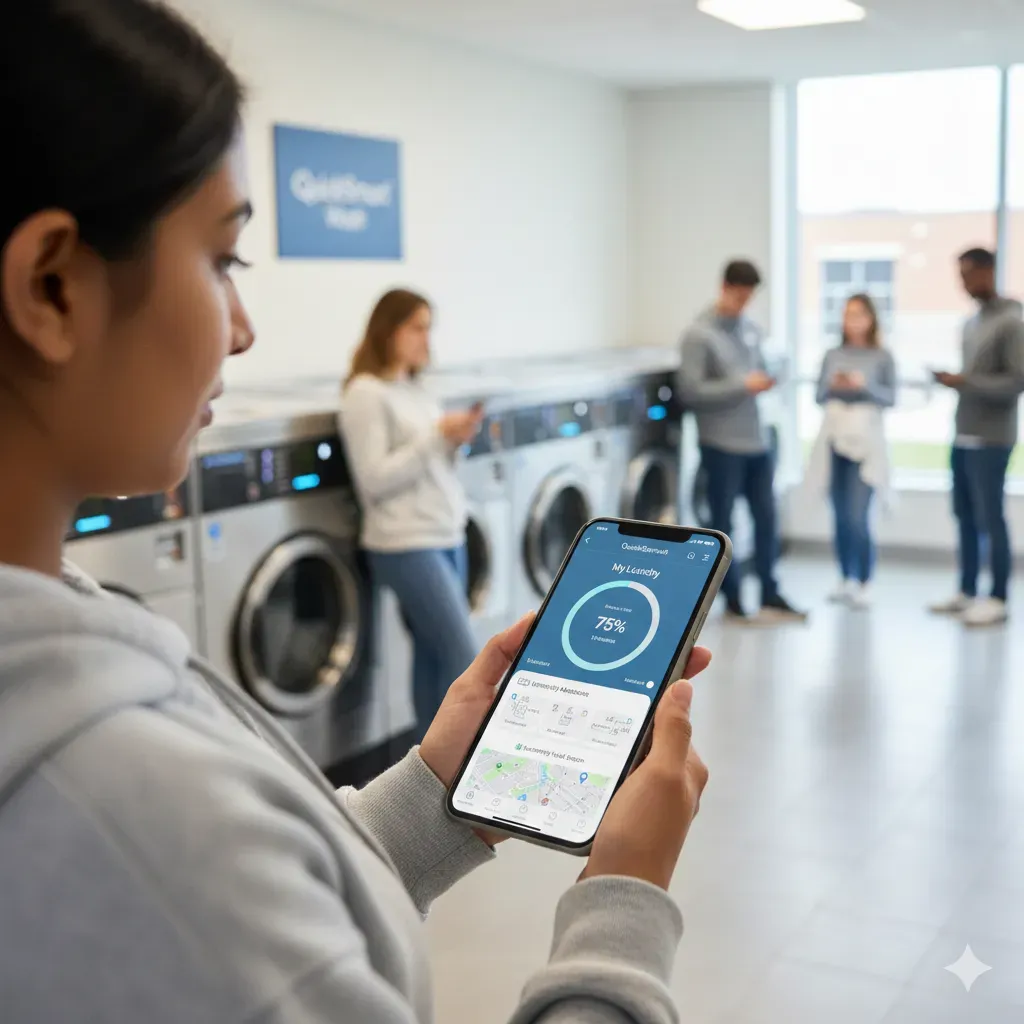
From the student's perspective, the shift from self-service to managed laundry removes a recurring source of friction from daily life. There is no queuing for machines, no uncertainty about whether a machine is working, no concern about clothes being handled by others, and no variation in the quality of what comes back.
Students drop their clothes at a collection point, and they come back clean, dried, ironed, folded, and ready to use. The process is predictable and the outcome is consistent, which is all most students actually want from a laundry service.
For parents evaluating residential facilities, the presence of a professionally managed laundry operation signals something meaningful about how the institution looks after its students' day-to-day welfare. It is one of those details that comes up in campus tours and parent conversations more often than institutions tend to expect.
How Quick Smart Wash Operates on Campus
The model Quick Smart Wash uses for educational campuses is built entirely around on-premises operation. Rather than taking linen off-site, they set up a fully equipped laundromat within the campus itself, staffed and managed by their own team. All equipment, infrastructure, and operational costs are covered by Quick Smart Wash. The institution carries no capital expenditure and no ongoing maintenance responsibility.
Students bring their clothes to a designated collection centre on campus. From there, the laundry is transferred to the on-campus facility where it goes through a complete wash, dry, iron, and fold cycle before being packed and made available for pickup. Everything stays within the campus. There is no off-site handling, no gap in the chain, and no uncertainty about where a student's clothes are at any point.
For the institution, this means a professionally run laundry operation with none of the operational burden of managing one. For students, it means a reliable, hygienic, and genuinely convenient service that makes one part of hostel life noticeably easier.
A Small Change with a Measurable Impact
Laundry is not the most glamorous aspect of running a residential campus. But it is one of the areas where a relatively straightforward operational change can produce consistent, measurable improvements across cost, hygiene, student experience, and sustainability all at the same time.
Institutions that have moved away from self-service models toward professionally managed linen services for educational campuses consistently find that the transition pays for itself in reduced utility costs, lower maintenance overhead, and a meaningful improvement in how students experience day-to-day residential life.
If your campus is still running on shared machines and the costs and complaints are starting to add up, it is worth looking seriously at what a managed alternative could offer.
About Md Shaquib
Md Shaquib enjoys blogging and content writing, sharing useful stories and tips online.